Commentary: Pop stars used to bare skin. Now they bare their souls
Advertisement
Commentary
Commentary: Pop stars used to blank peel. Now they bare their souls
Today, many artists are making their personal vulnerabilities – not their music, their performances or their bodies – the centerpiece of their brands, says a professor.
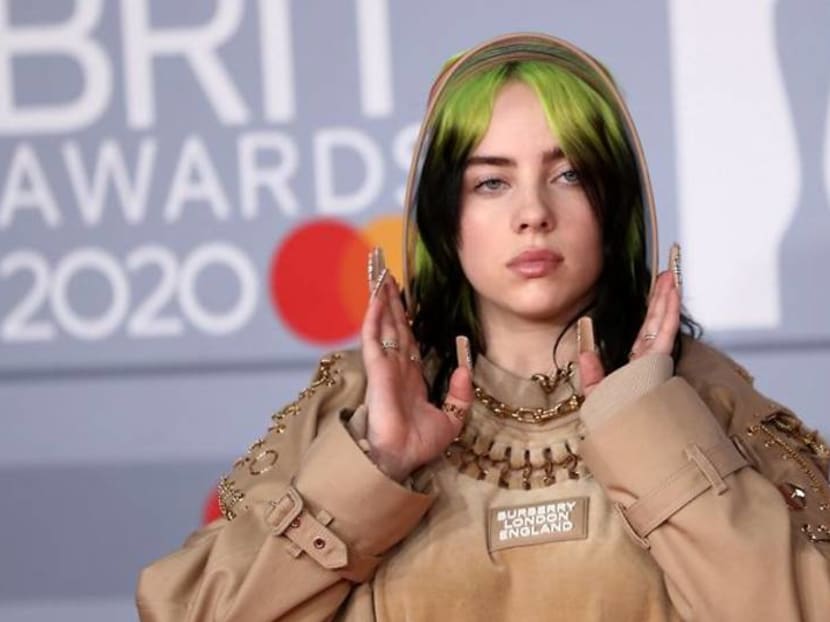
FILE PHOTO: Billie Eilish poses as she arrives for the Brit Awards at the O2 Arena in London, U.k., February xviii, 2022 REUTERS/Simon Dawson/File Photo
25 Jun 2022 03:39PM (Updated: 09 Jul 2022 06:46AM)
BOSTON, Massachusetts: In Billie Eilish'due south 2022 video for Bury A Friend, the then-17-year-old singer blurs the lines between being in a nightmare and being committed to a psychiatric hospital.
"I want to end me," she repeats half-dozen times before the song ends.
Merely somehow, that's non what stuck with audiences, media outlets or industry decision-makers, who – until her British Vogue cover bankrupt on May 2 – were more likely to talk well-nigh how groundbreaking she was for wearing baggy dress than her repeated mentions of suicidal thoughts.
READ: Billie Eilish debuts new look, talks most body positivity on British Vogue embrace
It's a familiar story, whether it'south Amy Winehouse singing about not wanting to go to rehab before dying of booze poisoning at 27, or Kurt Cobain writing a song called I Hate Myself And Desire To Die before dying by suicide at 27.
Audiences devour trauma narratives. Perchance they provide a source of comfort by validating viewers' own experiences, making them feel less alone or reminding them that they're comparatively lucky.
On the flip side, the titillating content can offer fans a sort of voyeuristic pleasure from the safety of their living rooms.
READ: Commentary: What good will Coldplay's vessel cleaning up Malaysia rivers do?
In any case, the implicit agreement appears to exist that artists may limited their pain as long every bit audiences can imagine that it'southward not really a trouble they need to exist concerned with, but is just something being amplified for artistic issue.
While these revelations can boost an artist'southward popularity, they tin can as well overshadow all other aspects of the artists' life and piece of work – and can terminate upwards veering into another form of exploitation.
AFTER THE Wearing apparel Come OFF, WHAT'S Side by side?
Since the advent of MTV in the 1980s, the music industry has fashioned women pop stars to resonate more than as sexy entertainers than as talented musicians.
They are more likely to exist framed as gorgeous, frivolous or "hot messes" than vocally or musically expert. Positioning and managing female artists this mode has had a negative effect on their creative expression, mental health and career longevity.
Because acme stars have been shedding their apparel for decades, pare-deep revelations have go so common they no longer stand out.
So, in a crisis for connection, stars reversed the club of operations, keeping their clothes on while sharing their secrets. Stars began to expose their insides – more than specifically, their inner turmoil – in bids for deeper relationships with their fans.
This broke the social contract of stardom. For decades, public relations efforts presented women stars as perfect – an incommunicable illusion for anyone to maintain. Until stars such as Mariah Carey and Whitney Houston experienced public breakdowns, their struggles had largely been hidden to protect their impeccable brands.
Social media further inverse the dynamic. Audiences demanded greater actuality rather than PR spin. And that's exactly what they've been getting for the past several years, equally popular star brands take begun to embody and reflect current cultural concerns virtually misogyny, racism, sexual violence and mental wellness.
READ: Commentary: Instagram has also many influencers and people are getting bored
READ: Commentary: Footling wonder why Malaysians are angry over celebrity Neelofa'southward repeated COVID-19 breaches
EMOTIONAL STRIPPING
Artists' openness nigh their experiences with sexual violence, trauma and addiction represents an of import shift toward thinking about them as people more than products.
However, today, many artists are making their personal vulnerabilities – not their music, their performances or their bodies – the centerpiece of their brands.
Prior to the popularisation of #MeToo in 2017, pop stars had been offering their stories for years to varying levels of reception. In 2013, Madonna shared that she had been raped at knifepoint presently after moving to New York City.
In 2014, Kesha alleged that producer Dr Luke "sexually, physically, verbally and emotionally" driveling her for years, and in 2022 Lady Gaga revealed that she had experienced sexual trauma, which resulted in ongoing PTSD.
READ: Commentary: Singapore's streets are insufficiently safe, merely women still face sexual danger
As the #MeToo movement gained prominence in the autumn of 2017, these popular artists experienced a long-overdue cultural rebranding, becoming esteemed warriors seeking to hold abusive systems and private abusers accountable.
Audiences and media outlets became more sensitive to women's struggles with mental health, habit and trauma, and began to realise that perhaps the stars' breakdowns were actually reasonable homo responses to various forms of gender-based abuse.
They started antisocial the game, rather than blaming the players, and wanting to know more – all every bit the ascendant streaming services were thirsty for more than winning content.

The floodgates opened, simply in typical American mode, a practiced matter was overextended to the betoken of absurdity.
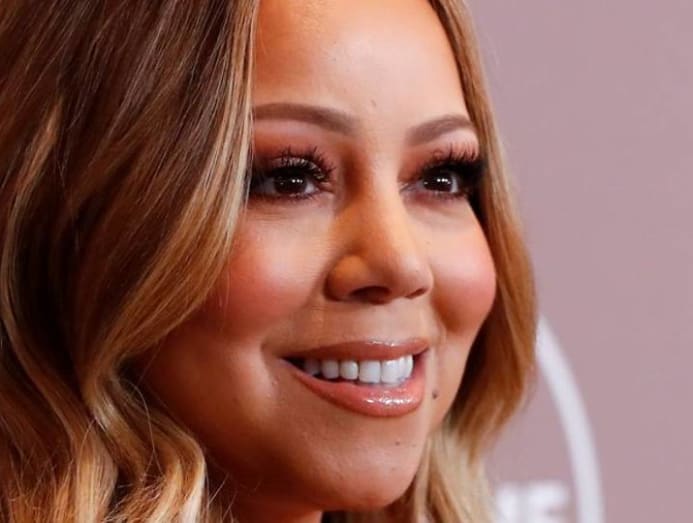
In recent years, more stars accept told their own survivor stories in powerfully direct or resonant ways: Ariana Grande shared a encephalon scan to reveal her PTSD diagnosis in 2019; Mariah Carey released a memoir in which she discussed past abuse, her 2001 breakup and her bipolar disorder diagnosis; and, in 2021, Pink dropped a documentary near her aptly titled "Cute Trauma" world tour.
READ: Commentary: Contrary to what we expect, women in senior roles face more than workplace sexual harassment
Stars' talent and musicianship has become almost incidental, subservient to their ability to process their pain in public. Popular stars' oversharing detailed trauma stories has get routine.
I call it "emotional stripping".
Emotional stripping is unlike from when artists transform trauma into swell art, as Beyonce did in Lemonade and Fiona Apple pulled off in Fetch The Commodities Cutters.
In each album, the artist is able to universalise her struggles without giving away all of the personal details. These albums embolden the stars equally they share their rage, fright, disappointments and vulnerabilities.
READ: Commentary: What existent revenge looks like when someone breaks your heart
But emotional stripping prioritises the overexposure of the star's human being self – her traumas, addictions, and mental health struggles – above all other aspects of her make and personhood. When a star emotionally strips, she peels away her brand – which, if congenital and managed properly, should be the protective layer between herself and her audience.
This trend signals progress in i regard – audiences are now less singularly focused on objectifying the stars' bodily bodies, as they had been trained to do for decades.
Merely it too creates a new danger; at present audiences experience entitled to know the gory details about everything that happens to and inside stars' bodies and minds. They greedily consume trauma stories rather than thinking more deeply about how to terminate the production of them.
Emotional stripping pays dividends: It gets the audience'due south attention. Information technology can also come at great expense to the creative person, who doesn't magically heal by simply telling her story from a big enough platform.
Talking about trauma has value, only it does not release it; equally trauma expert Bessel van der Kolk noted in the championship of his bestselling book, "the torso keeps the score". It tin can also cause stars harm through retraumatisation.
THE POP STAR Equally HUMAN SACRIFICE
But given audience demands for authenticity and the proliferation of pop star tell-all streaming documentaries, it appears that most emerging artists vying for the top of the charts now have piffling selection merely to reveal themselves anyhow.
But as certain body types and fashion styles accept divers the rules of date at other times, emotional stripping has become standard operating procedure in pop music.
This may seem like a dream come true. But it may be more than similar the waking nightmare depicted in Eilish's video for Bury A Friend.
Britney Spears and other 1990s stars, from Jennifer Beloved Hewitt to Paris Hilton, reported being triggered by Framing Britney Spears, a well-intentioned, pro-Britney documentary. Spears refused to participate in the picture, which chronicled her breakdown, involuntary hospitalisation and subsequent conservatorship.
READ: Britney Spears wants out of her conservatorship but that's easier said than washed, say experts
READ: What's with court conservatorships and the calls to #FreeBritney? Here'due south an explainer
In the documentary Tina, Tina Turner indicated that she was sick of talking about her abusive ex-husband Ike and wanted to move on.
The question is: Will audiences let Turner and other traumatised female pop stars move on? Or are audiences besides invested in trauma narratives to let them go?
Fans' light amplification by stimulated emission of radiation focus on stars and stars' tendency to delight can even pb fans to disturbing levels of entitlement.
Alanis Morissette, who wrote Jagged Little Pill when she was nineteen, shared that at the meridian of her popularity, fans in crowds would literally try to grab pieces of her hair and skin. They wanted to possess a piece of her and felt emboldened to just take information technology.
Fittingly, Katy Perry's documentary was called Office Of Me.
Meanwhile, it's typically the star, not the audition, who gets constructed as being crazy or needing amend boundaries equally the public annihilates them.
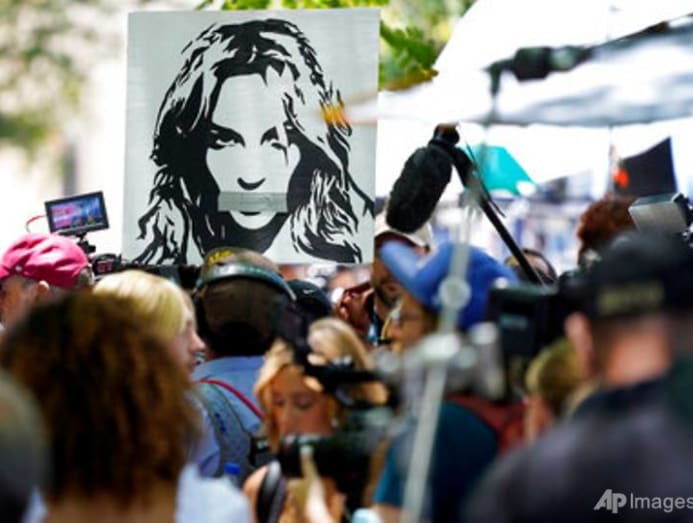
There's a precedent for this dynamic – the religious ritual of man sacrifice. Religion scholar Kathryn Lofton has written near this phenomenon in her analysis of Britney Spears.
"Ritual is a controlled environment, a ring for spectatorship. While at that place are many rituals at play in the religions of Britney Spears' celebrity, perchance the nearly tempting is that of sacrifice. Britney Spears rises and falls, time and again, is plumped for the slaughter and then primed for the improvement. Watching those declines and ascents might exist productively read as a sort of public sacrifice."
Spears has get the rule, non the exception. These days, pop stars seem to exist to entertain fans and carry their burdens, and can sometimes seem to even ultimately die for them, commercially or literally. Fans so motility on to the side by side star, gorge on their trauma and then scout them flame out.
READ: Commentary: Stop asking why she took the nude, start request why he shared it
The silver lining is that we're in the middle of the golden historic period of popular star documentaries. Some, like Amy and Whitney Can I Be Me, chronicle tragic endings.
Others enable stars to show their more vulnerable sides while they're yet alive and performing – Billie Eilish: The Earth's A Fleck Blurry, Taylor Swift'south Miss Americana and Lady Gaga's 5 Pes Ii.
Many of these documentaries complicate their subjects in positive ways, rehabilitating their troubled or entitled images past inserting nuance, empathy and context into their stories, often for the beginning fourth dimension.
A DEMI-GODDESS OF THE ZEITGEIST
Woman pop stars are finally starting to be seen more completely, at least superficially, equally documentary filmmakers deliver to evolved and evolving audiences nuanced takes on complicated and aspirational women.
But this momentary opportunity has quickly developed into what tin await like a competition for which star tin can be the most vulnerable.
READ: Commentary: Who really killed Republic of korea celebrity Sulli?
Demi Lovato, who recently came out as nonbinary, may be winning that distinction with Dancing With The Devil, a four-part documentary series that explores both personal and career challenges.

The serial is bold and moving, and sheds low-cal on the impact of trauma and habit. What remains to be seen is how the series will impact Lovato'south career.
Lovato, who is now 28, overdosed in 2018, surviving some barbarous furnishings: Three strokes, a heart attack and partial incomprehension. In Anyone, a vocal recorded days before the overdose, Lovato laments telling "secrets till my vocalization was sore" because "no one hears me anymore", "nobody'due south listening."
"I'm on my 9th life," Lovato said in Dancing With The Devil, "and I don't know how many opportunities I have left."
READ: Pop star Demi Lovato identifies equally not-binary, changes pronouns to they/them
READ: Commentary: Workers appreciate mental health days off afterward a crazy pandemic year
THE Demand FOR BETTER LISTENING
For those consuming these films for more than their entertainment value, some key questions about existing relationships betwixt artists and fans should exist emerging.
What are they sacrificing for audiences?
Gender and sexuality scholar Jane Caputi compares the extraction of resources from the country to the enduring damage to bodies and minds caused by sexual violence. In an interview, she said the emotional stripping of popular stars enacts "that same epitome of extraction without reciprocity, of taking what one wants and dumping what one refuses," with places and peoples reduced to "cede zones".
While Caputi suggests that this emotional stripping corruption of female pop stars reflects larger patterns of exploitation, communication scholar Nancy Baym argues that music "often predicts social modify".
If that'southward true, maybe the regular exposure of previously taboo subjects such as addiction and sexual corruption could minimise their stigma, and make audiences less drawn to the subjects.
Mayhap then – finally – the musicians' actual music can be the central focus of their careers.
And while it's unlikely emotional stripping will stop, the music industry could get more involved in helping these stars survive and thrive.
This could range from calculation thoughtful and inclusive wellness provisions to artist contracts – including seasoned hazards-of-fame counsellors in the standard artist entourage – and teaching fans how to be less reliant on their idols and more than emotionally secure themselves.
They could as well railroad train the parents of immature artists on the cusp of fame to exist more attuned to signs of distress in their children.
In Lonely, the closing track on Justin Bieber's new tape, he sings: "Everybody saw me ill, and it felt similar no one gave a sh**." GQ reported in May 2022 that at the peak of Bieber's fame, his bodyguards would check his pulse as he slept to make sure he was even so alive.
Perhaps Bieber's words could lead his fans and squad to consider their complicity.
READ: Commentary: When we call people with strange behaviour mentally ill, we reinforce mental wellness stigma
Despite the positive attention and accolades she receives, Eilish, too, appears to be screaming into the void. In Bury A Friend Eilish sings: "Honestly, I thought that I would exist dead past now (Wow)."
Her notebooks, shown in her documentary, reveal lines like: "I am a void. The epitome of nil".
Yet at 1 point in the picture, Eilish'southward mother, frustrated by people calling Billie's music depressing, notes that Billie's music isn't depressing, it'southward just that teenagers are depressed.
READ: Commentary: Goo Hara's death should atomic number 82 K-popular fans to exercise some soul-searching
"We need a stop gap for artist intendance," artist manager Janet Billig-Rich, who managed Nirvana and Hole, among others, told me. "In that location is a parallel to the Amy Winehouse story where people are saying, 'At least the parents are there and really involved.' Simply they're on the payroll, likewise, so at that place'southward a conflict.
"There need to be people in that inner circle thinking only most the artist's interest. If we could convince the families and business people to be long-term greedy rather than brusque-term greedy, the artists would have longer, healthier lifespans and fifty-fifty more lucrative careers."
Perhaps doing the right affair for the wrong reasons is the best we can promise for from the music business.
Kristin J Lieb is Associate Professor at Emerson College. This commentary offset appeared on The Conversation.

Contempo Searches
Trending Topics
Source: https://cnalifestyle.channelnewsasia.com/commentary/music-eilish-spears-lovato-gaga-metoo-abuse-mental-health-media-249281
0 Response to "Commentary: Pop stars used to bare skin. Now they bare their souls"
Post a Comment